As we enter play on Tuesday, July 9, 2024 the Orioles are currently leading the American League East by three full games over the second-place Yankees.

With the All Star break coming up at the end of this week, I began to wonder:
Where would a three-game lead at the All Star break in terms of best first halves in Orioles’ history?
The answer surprised me a little bit.
To begin, let’s take a look at where the Birds have been at the break over the past few years.
In 2023, the O’s were in second place…just two games off the pace. But in 2022, the turnaround had really just gotten started…and the O’s were in fifth place at the break, a whopping 18 games out of first.
Now – before we dig back further in the history books and look at just how large the club’s leads were in its best seasons, let’s quickly address the recent rebuild.
In 2021, the O’s were 26 games out of first at the break…in 2019 they were 30.5 games off the pace…and in 2018 they were an astounding 39.5 games out of first place at the All Star break. Yikes.
(Even the 1988 team was “only” 25 games off the pace in that historically awful season.)
But let’s get back to the good times. Remember…the O’s are currently holding a three game lead in the division. With six games left to play before the break – and three of those against second-place New York – that number could rise by Sunday night.
How much would the O’s lead need to climb in order to be among its best-ever?
For starters, the most recent O’s team to head into the All Star break in first place might come as a surprise to you: It was the 2016 team, which had a 2.0 game lead at the Break.
That 2016 team, in fact, stayed in first place until mid-August. Their 38-37 overall second half record relegated them to the Wild Card Game, which took place in Toronto…and that’s all I’m going to say about that.
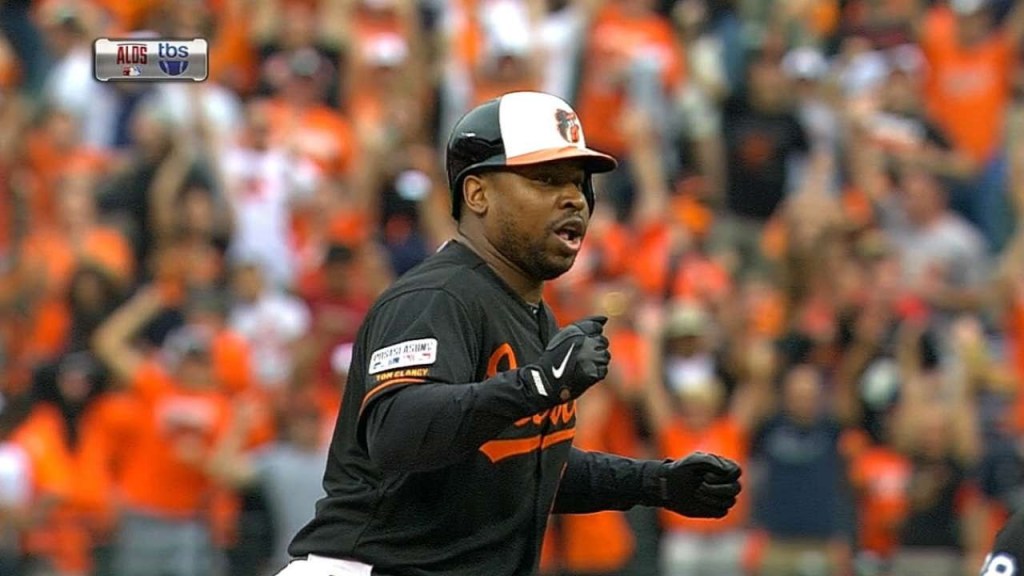
Before that 2016 team, of course, there was the 2014 division winner. Buck Showalter’s best Orioles’ squad went into the break with a 4.0 game lead in the division, which they never lost, eventually winning the flag by 12 games.
To find a division leader at the All Star break prior to 2014 you have to go all the way back to 1997, when the wire-to-wire O’s squad took a 7.0 game lead into the pause and eventually won the division by two games.
The Why Not 1989 Orioles had a 5.5 game lead at the break, and they stayed in the top spot until September 1st before eventually finishing in second place, two games behind Toronto.
In the team’s most recent championship season of 1983, they entered the All Star break in second place, one game behind first-place Toronto. The O’s would bounce around a bit – from first to third – in July and August of ’83 before settling into the top spot on August 26 and eventually winning the division by six games.
The 1979 Orioles had a two-game lead at the All Star break and eventually won the division by eight games.
In 1971 the O’s had a 5.5 game lead at the break (eventually winning by 12)…in 1970 they had a 6.0 game lead at the break (eventually winning by 15)…and the 1966 Orioles had a 8.0 game lead in the American League (there were no divisions yet) at the break, before eventually winning by nine.
But the Orioles’ squad with the largest lead at the All Star break in modern club history was the 1969 team, which took a commanding 11-game lead into the break. That club would go on to win 109 games – most in team history – and ultimately won the first-ever American League Eastern Division title by a whopping 19 games.
Here’s a look at the 1969 A.L. East standings at the All Star break:

There’s not enough time for the O’s to push their division lead up as high as the 1969 team’s 11-game edge. But it’s very possible for the lead to move past the four-game edge the 2014 had, meaning — with a strong week — this Oriole team could enter the break with its largest division lead since 1997.

 Trust Your Stuff